- Jan 1, 2026
Crude Oil Price Outlook: How Geopolitics and Supply Risks Impact the Market
A U.S. military invasion of Iran would be very likely to drive oil prices higher, potentially sharply so. The effect would stem from supply risk, transportation chokepoints, and market psychology, even if physical supply disruptions were initially limited.
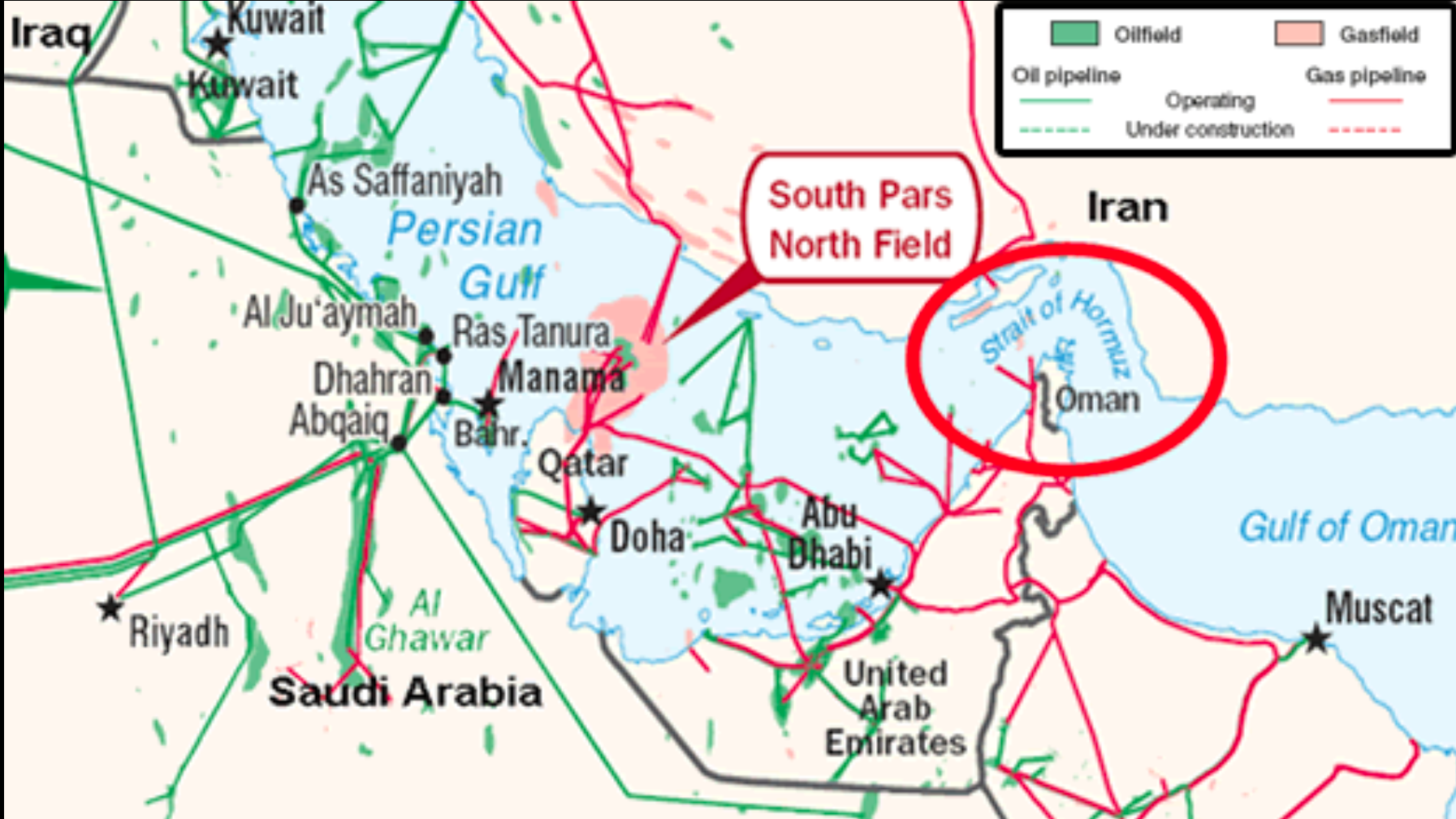
1. Risk to the Strait of Hormuz (Primary Factor)
Iran controls coastline along the Strait of Hormuz, the world’s most critical oil transit chokepoint.
Roughly 20% of global oil supply passes through this narrow waterway.
-
Even threats of closure (mines, missiles, drone attacks, harassment of tankers) can cause:
Immediate price spikes
Higher shipping insurance costs
Tanker rerouting delays
Markets price risk, not just actual shutdowns. A partial disruption would still move prices materially.
2. Loss or Threat of Iranian Oil Supply
Iran is a major oil producer and exporter.
Iran produces roughly 3–4 million barrels per day under normal conditions.
-
War could:
Destroy or disable production facilities
Eliminate exports entirely
Tighten global spare capacity
With limited short-term replacement supply available, prices would rise to ration demand.
3. Spillover Risk to Other Producers
Conflict with Iran would raise fears of escalation affecting:
Saudi Arabia
Iraq
Kuwait
UAE
These countries together account for a substantial share of global exports. Any perceived threat to their infrastructure (pipelines, ports, refineries) amplifies price volatility.
4. Speculation and Financial Market Reaction
Oil markets react instantly to geopolitical shocks:
Traders buy futures to hedge against shortages
Speculative capital flows into commodities
Volatility premiums expand
This can push prices higher before any oil supply is actually lost.
5. OPEC and Strategic Reserves Have Limits
-
OPEC spare capacity exists, but:
It is limited
It cannot fully offset a Hormuz disruption
Strategic Petroleum Reserves can smooth short-term shocks but cannot replace sustained Middle East supply
And here's my Chart Analysis:
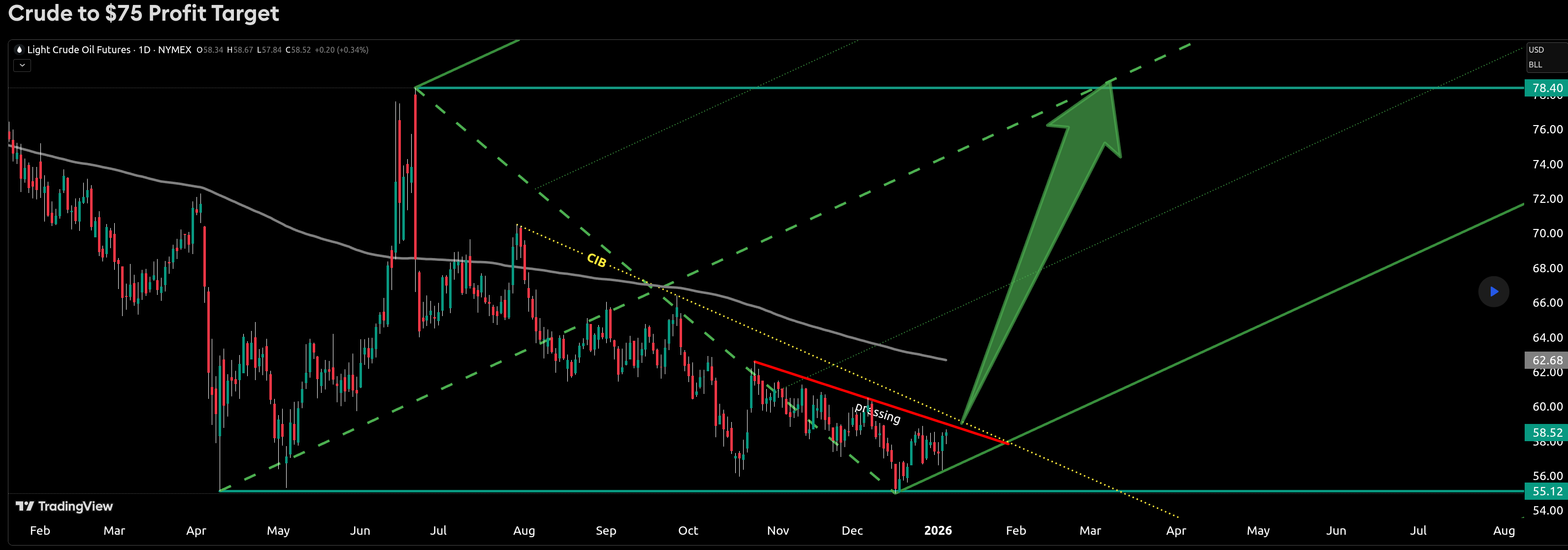
The chart needs to confirm my thesis.
First, I want to see a break of the descending pressure line (red).
Next, the CIB line must be broken.
Finally, a sign of stabilization above the CIB line would serve as my entry signal.
That’s it. My stalker hat is on.
You can follow and replay this chart in the future on TradingView by clicking this link